
Property Prices Dubai 2026 Trends Valuations and Best Areas to Buy
Introduction
Dubai’s property market keeps making headlines in 2026. Despite global economic shifts, buyers from every corner of the world still look to this city for opportunity. From European investors to Asian buyers, the interest in the UAE real estate market continues to grow. But here is the thing: understanding current property prices in Dubai is not always easy. Prices change depending on the neighborhood, the type of property, and the market segment you are looking at. A villa in Palm Jumeirah costs very different from an apartment in Dubai South. And without reliable data, it is easy to overpay or miss the right opportunity.
So what is actually happening right now? According to the latest Dubai Housing Market 2026 report, residential sales in Dubai reached 79,281 transactions worth AED 221.4 billion during the first half of 2026. That tells you demand is still strong across the board. Whether you are searching for houses for sale in Emirates Hills Dubai, cheap Dubai houses for sale, or luxury homes real estate, knowing these trends puts you ahead of the game.
Understanding property prices in Dubai is about more than just looking at raw numbers.

You also need to know which areas are growing fastest, what type of properties offer the best long term value, and how the market shifts month by month. That is exactly what this guide covers.
We break down the latest data from trusted sources. We explain what drives prices in different communities. And we share practical advice for buyers and investors who want to make informed decisions in 2026. No complicated jargon. Just clear, useful information that helps you move forward with confidence.
If you want to explore specific options, check out our Dubai real estate market guide for 2026 to see detailed community breakdowns and price comparisons.
And if you are ready to take the next step, a FREE Dubai Real Estate Consultation can connect you with an expert who understands the market inside and out.
Let us dive into the numbers and see what is really happening in Dubai right now.
Dubai Property Market Overview 2026: Key Trends
So what do the numbers actually tell us about property prices Dubai in 2026? The story is one of steady growth, shifting buyer preferences, and strong government support. Let us walk through the three biggest trends driving the UAE real estate market right now.
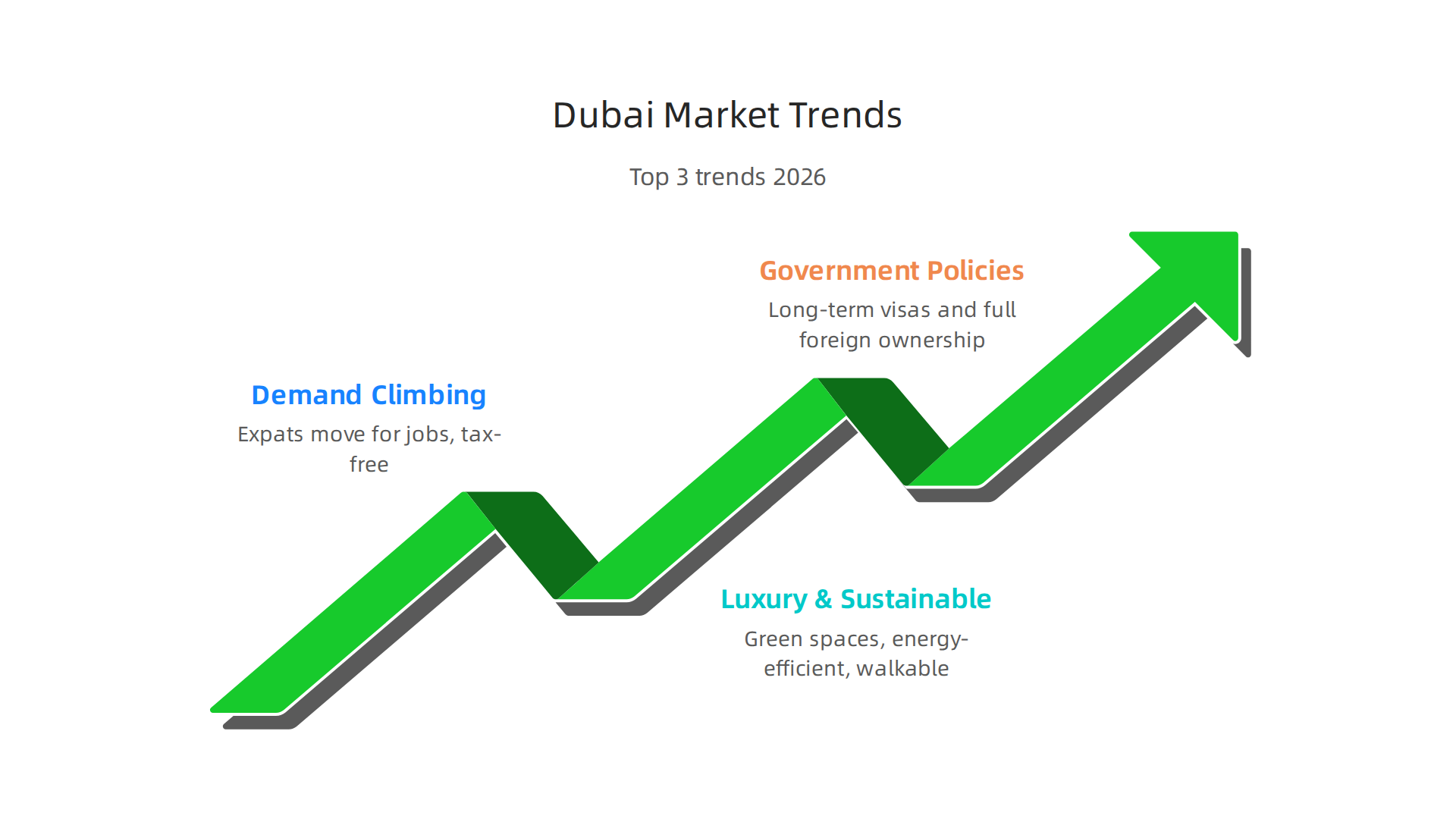
Trend 1: Demand keeps climbing. The post-pandemic recovery never really stopped. Expats continue to move to Dubai for jobs, tax free income, and lifestyle. Investors see the city as a safe place to park their money. The numbers back this up. According to the Dubai property transaction volume analysis for 2026, total transactions across all property segments hit over 280,000 in 2025. That was a 19% jump from the year before. Early 2026 data shows the momentum carrying forward. Whether you are looking at cheap Dubai houses for sale or high end villas, buyers are active across every price point.
Trend 2: Luxury and sustainable living take center stage. Developers are not just building more units. They are building smarter. Communities like Emirates Hills, Palm Jumeirah, and Dubai Hills Estate now include green spaces, energy efficient designs, and walkable neighborhoods. Buyers who want houses for sale in Emirates Hills Dubai are paying a premium for this lifestyle. At the same time, mid-market areas are also adopting sustainable features. This shift means that luxury homes real estate is no longer just about square footage. It is about how a property fits into a larger, healthier environment.
Trend 3: Government policies open the door wider. The UAE government continues to make it easier for foreigners to buy and own property. Long term residency visas (like the Golden Visa) give investors peace of mind. And the rule allowing 100% foreign ownership in designated areas removes a major barrier. These policies directly boost demand for property prices Dubai across all segments. More buyers means more competition, which pushes values up over time.
If you want a deeper look at how different communities are performing right now, check out our Dubai real estate market 2026 guide. It breaks down prices and trends neighborhood by neighborhood.
And if you are thinking about making a move, a FREE Dubai Real Estate Consultation can connect you with an expert who knows the market inside out. No pressure, just honest advice based on your goals.
Next we will break down the average price per square foot across Dubai’s most popular neighborhoods. That is the real number that matters when comparing properties.
Property Prices Dubai: Current Valuation Insights
Now that you have seen the big picture, let us zoom in on the numbers that really matter.

How much does property actually cost per square foot in Dubai right now? And what kind of price changes can you expect across different communities?
Let us start with a simple baseline. In May 2026, the average price across all property types stood at AED 1,650 per square foot. That figure comes from the Dubai Real Estate Market Overview May 2026, which tracks actual transaction data. So if you are looking at a standard 1,000 square foot apartment in a mid-range area, you are probably looking at around AED 1.65 million. But of course, it is never that simple.
Prices vary a lot by property type and location.
Villas in sought after communities cost significantly more per square foot than apartments. For example, a villa in Dubai Marina or Palm Jumeirah can easily push past AED 2,000 per square foot. Apartments in the same areas often sit closer to AED 1,800 to AED 2,200. Meanwhile, in emerging areas like Dubai South or Dubai Sports City, you might find units under AED 1,500 per square foot.
Price trends over the past year tell a story of slow and steady growth.
The market has not been roaring like it was a couple of years ago, but prices are still ticking upward. The Residential Market Sales Price Index, which tracks overall market movement, rose by 15.6% year-on-year in the first quarter of 2026. That is a healthy gain, especially when you compare it to many global markets that are flat or dropping.
So what is driving these prices? A few factors are unique to Dubai.
- Tax free environment. No property taxes mean every dirham you spend goes toward the asset itself, not the government. That keeps demand high.
- Supply discipline. Unlike in previous boom cycles, developers are not overbuilding. New projects are launched at a measured pace, which supports prices.
- Population growth. More people moving in means more buyers competing for a limited number of homes.
If you are weighing the costs of a villa versus an apartment in a premium community, check out our guide on buying a luxury villa in Dubai 2026. It breaks down price ranges and what to look for in each neighborhood.
Next we will take a closer look at the hottest up-and-coming markets where prices are still within reach for many buyers.
Factors Driving Property Prices in 2026
So why are property prices in Dubai moving the way they are? It is not random. A few big forces are at work. Understanding them helps you make smarter choices whether you are buying, selling, or just watching the market.
Economic factors play a huge role.
Dubai’s economy keeps growing. GDP is up on the back of strong tourism, trade, and finance. That means more jobs and more people with money to spend. Inflation in the UAE is milder than in many Western countries, so your dirham keeps more of its value. Interest rates have also settled down after a few years of hikes. That makes mortgages more predictable. When borrowing costs are stable, both buyers and investors feel more confident jumping in.
Supply and demand tip the scales.
Here is the simple truth. More people want to live in Dubai every year. The population keeps climbing thanks to new visa rules and a steady flow of expats. At the same time, developers are not flooding the market with new homes the way they did a decade ago. They launch projects at a measured pace. That keeps supply tight and prices supported. Check out the latest data in this Dubai housing market mid-year review from Engel & Völkers. It shows how population growth continues to soak up new inventory.
Regulatory changes build trust.
The Dubai Land Department and RERA have rolled out smart rules recently. Things like stricter off-plan escrow accounts, clearer fee structures, and better tenant protections. These changes make the market safer for everyone. When buyers and investors feel protected, they are more willing to act. The government is also pushing transparency with open data on transactions. That helps you compare prices without guesswork.
All these factors together explain why property prices in Dubai have stayed resilient even when global markets wobble. The market is not perfect, but the foundations are solid.
If you want to jump into the market with expert guidance, you do not have to go it alone. Ayaz Salman offers a FREE Dubai Real Estate Consultation for buying, selling, renting, or investing. It is a no-risk way to get personalized advice.
For a deeper dive into how these trends affect specific neighborhoods, take a look at this Dubai real estate market 2026 guide. It breaks down prices and communities in plain language.
Best Areas for Buyers and Investors
You know the market is strong. Now comes the real question: where should you put your money?

The answer depends on what matters most to you. Are you looking for a family home with great schools and green spaces? Or do you want the highest possible rental return? Maybe you are after long term growth in a neighborhood that is still taking shape. Here is a breakdown of the best spots for each goal.
Family friendly communities worth a closer look.
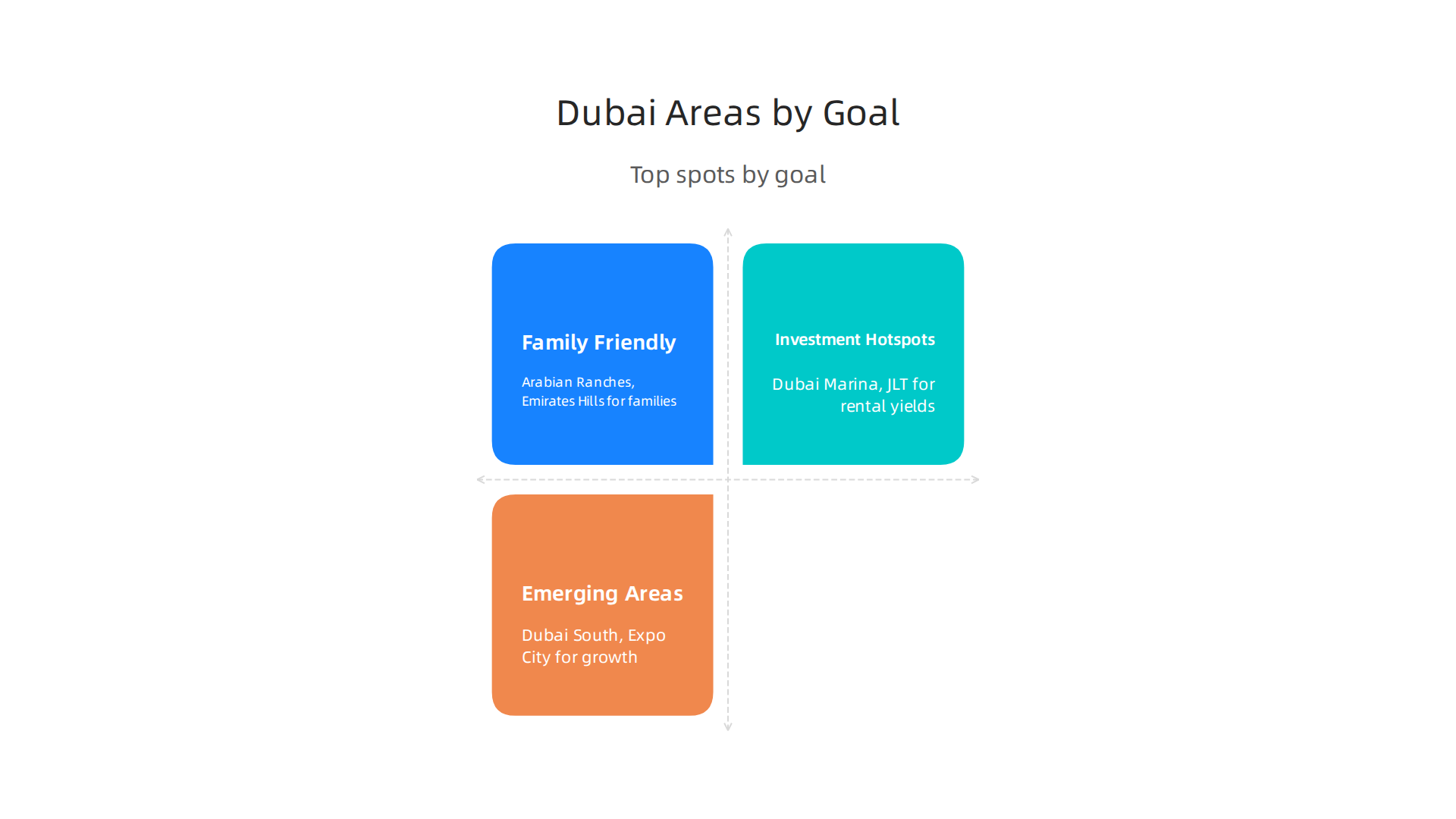
If you have kids or plan to, you want space, safety, and good schools. Arabian Ranches is a top pick for many families. It has large villas, quiet streets, and a real community feel. You also get easy access to main roads. Another standout is Emirates Hills. It is one of the most prestigious address in Dubai. Think luxury homes real estate at its finest. The golf course views and private security make it a favorite for those who want privacy. If you are curious about specific listings, you can browse the latest options on this Arabian Ranches villa for sale page. It gives you a clear picture of what is available right now.
Investment hotspots with serious rental yields.
For investors, the name of the game is return. You want a property that pays for itself and then some. Dubai Marina and JLT (Jumeirah Lake Towers) are proven winners here. They attract young professionals and tourists who are happy to pay top dollar for a good view and proximity to the action. The numbers back this up. According to the latest average rental yields by community from Engel & Völkers, apartments in areas like Dubai Marina deliver yields averaging around 7.15%. That is strong by any global standard.
But do not overlook neighborhoods like Jumeirah Village Circle (JVC) and Dubai Silicon Oasis. These areas offer more affordable entry prices while still delivering impressive returns. The latest best rental yields in Dubai 2026 data from GuestReady shows JVC hitting average yields of 7.21% for larger flats. For a studio in Al Furjan, yields can climb as high as 8%. That is the kind of number that gets investors excited.
Emerging areas with room to grow.
If you are playing the long game, look at neighborhoods that are still developing. Dubai South and Expo City are prime examples. These areas are built around the new Al Maktoum International Airport and the legacy of Expo 2020. Prices are still reasonable today, but the potential for capital appreciation is huge as more businesses and residents move in. You can find cheap dubai houses for sale in these pockets if you are willing to buy early.
For a complete view of what each community offers, check out this Dubai real estate market 2026 guide. It covers prices, layouts, and lifestyle vibes across the city.
The smartest move you can make is to match your area to your goal. Families go for Arabian Ranches or Emirates Hills. Yield chasers head to Marina, JLT, or JVC. Growth seekers look at Dubai South and Expo City.
Still not sure where to start? You do not have to figure it out alone. Reach out for a FREE Dubai Real Estate Consultation with Ayaz Salman. He will help you match your budget and goals to the right neighborhood with no pressure.
Navigating the Buying Process: Legal and Financial Steps
You have picked your neighborhood. Now comes the part that scares most people: the paperwork. But honestly, it is not as hard as it sounds. The Dubai government has made the process clear and safe for everyone, especially international buyers.
Let us walk through what you need to know.
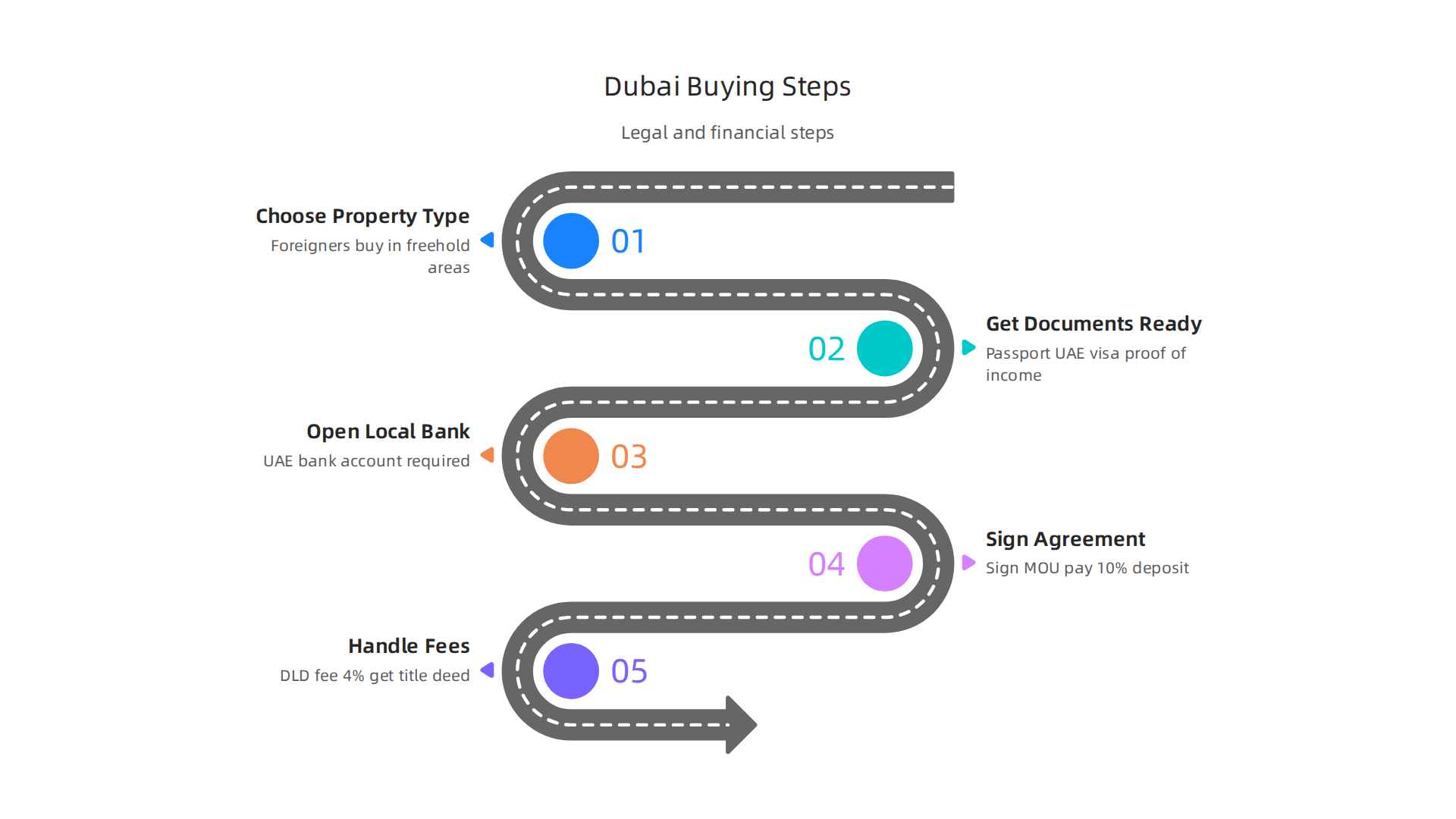
Step one: choose the right property type.
Foreigners can only buy in designated freehold areas. That includes most of the communities we talked about earlier like Dubai Marina, JLT, and Arabian Ranches. Make sure the property you want sits in a freehold zone. Your agent will confirm this.
Step two: get your documents ready.
You will need a valid passport, a UAE visa, proof of income, and recent bank statements. If you are not a resident yet, that is okay. You can get a visa through property ownership. In 2026, the government removed the minimum threshold for investor visas, so even smaller purchases can qualify. For a complete list of required paperwork, check out this guide on laws and costs for foreigners buying property.
Step three: open a local bank account.
You need a UAE bank account to transfer the deposit and final payment. Most banks let non residents open an account with your passport and proof of address from your home country. Do this early to avoid delays.
Step four: sign the agreement and pay the deposit.
Once you agree on a price with the seller, you sign a Memorandum of Understanding (MOU).

Then you pay a deposit, usually 10% of the purchase price. This is called the earnest money deposit.
Step five: handle the legal fees and registration.
This is where the numbers matter. The Dubai Land Department (DLD) charges a registration fee of 4% of the property price. So if your property prices dubai come out to AED 1 million, you pay AED 40,000 in DLD fees. There are also small admin fees for the trustee office and the title deed. Your agent will explain the exact breakdown. After payment, the DLD registers the property in your name and issues the title deed. You are officially an owner.
Financing options for buyers.
If you need a mortgage, the rules depend on whether you live here or not. For residents, you can borrow up to 80% of the property value for a first home. For non residents, the maximum is 50%. That means you need a bigger down payment, typically 20% if you are a resident and 50% if you are not. Shop around for mortgage rates because they vary between banks.
The whole process takes about two to four weeks from offer to handover. It is straightforward if you have the right help.
If you want to see all the steps laid out in one place, read this detailed guide to buying an apartment in Dubai. It covers the exact documents and timelines.
Understanding the uae real estate market and its buying rules will save you time and money. Whether you are looking at luxury homes real estate in Palm Jumeirah or cheap dubai houses for sale in JVC, the legal steps are the same. Take them one at a time, and you will be holding your title deed before you know it.
Expert Tips for Maximizing ROI
Once you hold that title deed, the smart work begins. How do you make sure your property earns you the best possible return? Let us look at three expert strategies that work well in 2026.
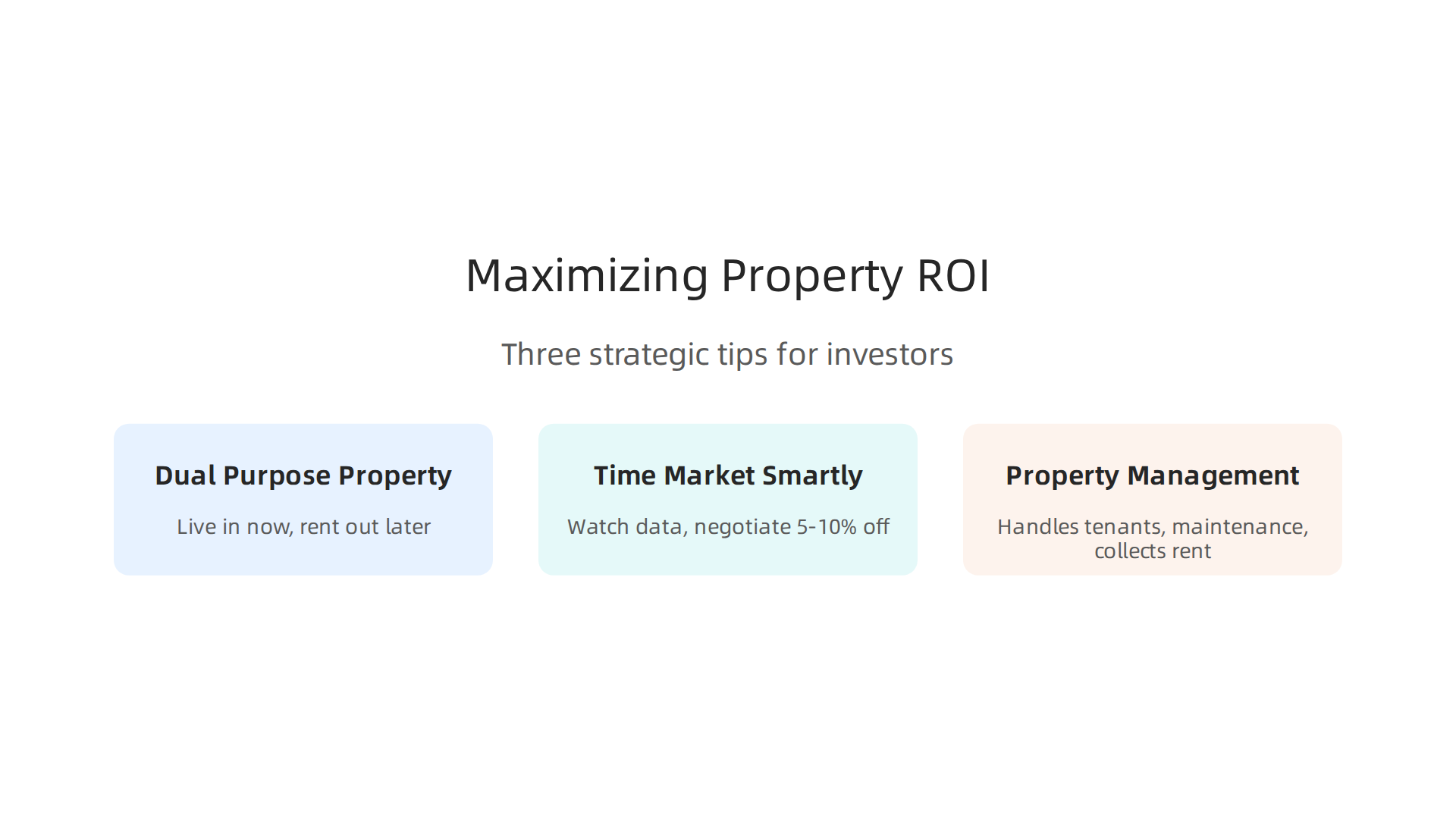
Choose a property with dual purpose.
Top investors look for homes that can do double duty. Buy a place that works as your home today and a rental asset tomorrow. Communities like Arabian Ranches and Jumeirah Village Circle are built for families. If you buy there, you can live in it for a few years. When your plans change, you rent it out. The demand stays high because families always need good homes.
If you want to explore this approach, check out this Arabian Ranches family community guide. It explains why these areas hold their value so well. Looking at houses for sale in emirates hills dubai is another smart move for long term growth.
Some communities are known for strong rental returns. Areas like Dubai Silicon Oasis and JVC offer high yields for investors. This Best Places to Invest in Rental Property in Dubai (2026 Guide) lists them as top picks.
Time the market and negotiate smartly.
You do not need to predict the future. Just watch the data. The Dubai Real Estate Market Trends in 2026 show steady demand and healthy transaction volumes. Use this knowledge when you sit down to negotiate.
Sellers are more willing to deal when they see you understand the real property prices dubai. Do not be shy to ask for 5% to 10% off the asking price on ready homes. A motivated seller will often accept a fair offer rather than wait months for a better one.
Leverage property management for passive returns.
This is the secret weapon for busy investors. A good property management company handles everything. They find tenants, fix maintenance issues, and collect rent on your behalf. This keeps your uae real estate market investment earning money without daily stress.
Even if you buy cheap dubai houses for sale, professional management can make the returns beat an expensive luxury home that sits empty. Apartments in Dubai offer average rental yields of 7.15% according to the average rental yields in Dubai 2026 report. That is strong compared to most global cities.
Every investment is different. Your goals, budget, and timeline matter. If you want a plan built around your specific needs, talk to someone who knows the market inside out. Get your FREE Dubai Real Estate Consultation today and start making smarter moves in 2026.
Summary
This article explains what is driving property prices in Dubai in 2026 and gives a practical guide for buyers and investors. It covers recent market data — including 79,281 residential transactions worth AED 221.4 billion in H1 2026 and an average price of about AED 1,650 per square foot in May 2026 — and three big trends: rising demand, a shift toward luxury and sustainable living, and supportive government policy. You will find neighbourhood-level advice (family areas like Arabian Ranches and Emirates Hills, yield hotspots such as Dubai Marina and JVC, and growth plays like Dubai South), clear explanations of legal and financial steps, and the real costs to budget for (eg. a 4% DLD registration fee). The guide also explains the main market drivers — economy, supply and demand, and regulation — and gives actionable tips to boost ROI, from buying dual-purpose homes to using property management. After reading, you’ll understand current valuations, where to search based on your goals, the paperwork and fees involved, and how to negotiate and manage your investment in 2026.