Abu Dhabi Job Market Overview for Various Professions in 2026

Introduction: Why the UAE Job Market Remains a Magnet for Global Talent
Thinking about moving to the United Arab Emirates for work in 2026? You are not alone. The UAE keeps attracting skilled professionals from all over the world. Why? The government is pushing hard to diversify the economy. This creates strong demand for expat workers in many fields.
The UAE just made it easier to get a work permit. The government simplified its system to 13 permit types. This change speeds up hiring and cuts paperwork. You can read more about the latest UAE work permit reforms to see how these changes affect you.
But here is the thing: Abu Dhabi and Dubai are not the same. They offer different job markets. Abu Dhabi is the capital and home to big energy projects, government roles, and education hubs. Dubai leads in tourism, technology, trade, and logistics.
Understanding both markets is key to a successful relocation.
This guide gives you an abu dhabi job market overview for various professions. We cover roles like merchandiser job vacancies in dubai, virtual assistant jobs, and even adnoc driver job vacancies. And because moving with family brings extra needs, we also discuss driving and family relocation jobs in dubai to help you settle smoothly.
Here is the most important part: where you work decides where you should live. Your commute, your community, and your budget all link back to your job location. That is why this guide connects career advice with housing decisions.
For a deeper look at Dubai property trends this year, check out this 2026 guide to the Dubai real estate market. It helps you match neighborhoods to your workplace.
Once you find the right job, finding the right home is the next big step. For free one-on-one help, you can get a free Dubai real estate consultation with an expert who knows the market inside out.
Abu Dhabi’s Economic Pillars: Where the Jobs Are in 2026
So what does an abu dhabi job market overview for various professions look like in 2026? The capital is no longer leaning only on oil. It is building a smart, green, and diverse economy.

This shift creates a steady stream of opportunities for expat workers across many fields.
Government plans like Ghadan 21 and Abu Dhabi Economic Vision 2030 are pouring investments into financial services, renewable energy, healthcare, and technology. According to the UAE Economic Indicators, FDI, and Trade Trends 2026 report, non-oil GDP in Abu Dhabi is expanding fast. The non-oil sectors now make up a huge part of the local economy.
The UAE is also targeting global leadership in future industries. The UAE Sectors of the Future report highlights fintech, agritech, and life sciences as major hiring engines. These sectors need skilled professionals, from engineers to business analysts.
For people with retail backgrounds, the growing population creates steady demand. You can find merchandiser job vacancies in dubai and across the Emirates. If you prefer remote or support roles, virtual assistant jobs are also increasing as companies scale up. And for those looking at logistics or energy work, adnoc driver job vacancies come up regularly thanks to large-scale infrastructure projects.
High-paying positions are common in energy, aerospace, and financial services. If you are moving with family, driving and family relocation jobs in dubai and Abu Dhabi offer competitive packages and long-term stability. The education sector is also strong. If you are an academic or administrator, learning how to land NYU Abu Dhabi jobs in 2026 might open a great career path.
After you secure that job offer, finding a home close to work is the next big step. If you are exploring both emirates, check out this 2026 trends and buying guide for the Dubai real estate market to see what neighborhoods match your lifestyle and budget.
Dubai’s Diversified Economy: Trade, Tourism, and Technology Driving Growth
While Abu Dhabi drives growth in energy and finance, Dubai tells a different story. This emirate has built its success on trade, tourism, and technology. And in 2026, those sectors are creating plenty of chances for job seekers.
Dubai’s location has always been its superpower. It sits right between Europe, Asia, and Africa. That makes it a natural hub for global trade and logistics. The Expo 2020 legacy keeps paying off too. The infrastructure built for that event now supports new businesses, events, and tourism projects. Hotels, airports, and free zones continue to expand.
Technology is the other big story. Fintech, e-commerce, and digital services are booming. The UAE is positioning itself as a global fintech leader, and Dubai is at the center of that push. If you work in software, data, or digital marketing, there is a lot of demand. The city also attracts top talent from around the world, which means competition is healthy but opportunities are real.
Construction and real estate remain pillars of Dubai’s economy. Mega-projects and population growth keep developers busy. If you work in project management, engineering, or property sales, there are steady openings. And if you are thinking of buying a home here, knowing the market helps. You can explore the latest trends through this expert guide on how to buy an apartment for sale in Dubai in 2026.
Tourism and hospitality are also strong. New attractions, cultural events, and world-class shopping keep visitors coming. That means hotels, restaurants, and entertainment venues need staff year round.
The combination of trade, tech, tourism, and construction means Dubai offers a wide range of jobs. Whether you are a logistics expert, a software developer, or a real estate agent, there is room to grow. And if you are considering making Dubai your home, getting expert advice on property can make the move smoother. You can connect with a specialist through a FREE Dubai Real Estate Consultation to discuss your options.
In‑Demand Professions for Expats in 2026: Qualifications, Salaries, and Growth Prospects
So you know Dubai is booming. But what about the rest of the UAE? If you are building an abu dhabi job market overview for various professions, the picture looks very strong in 2026. Healthcare, IT and cybersecurity, renewable energy, engineering, and finance are the top sectors hiring expats right now.
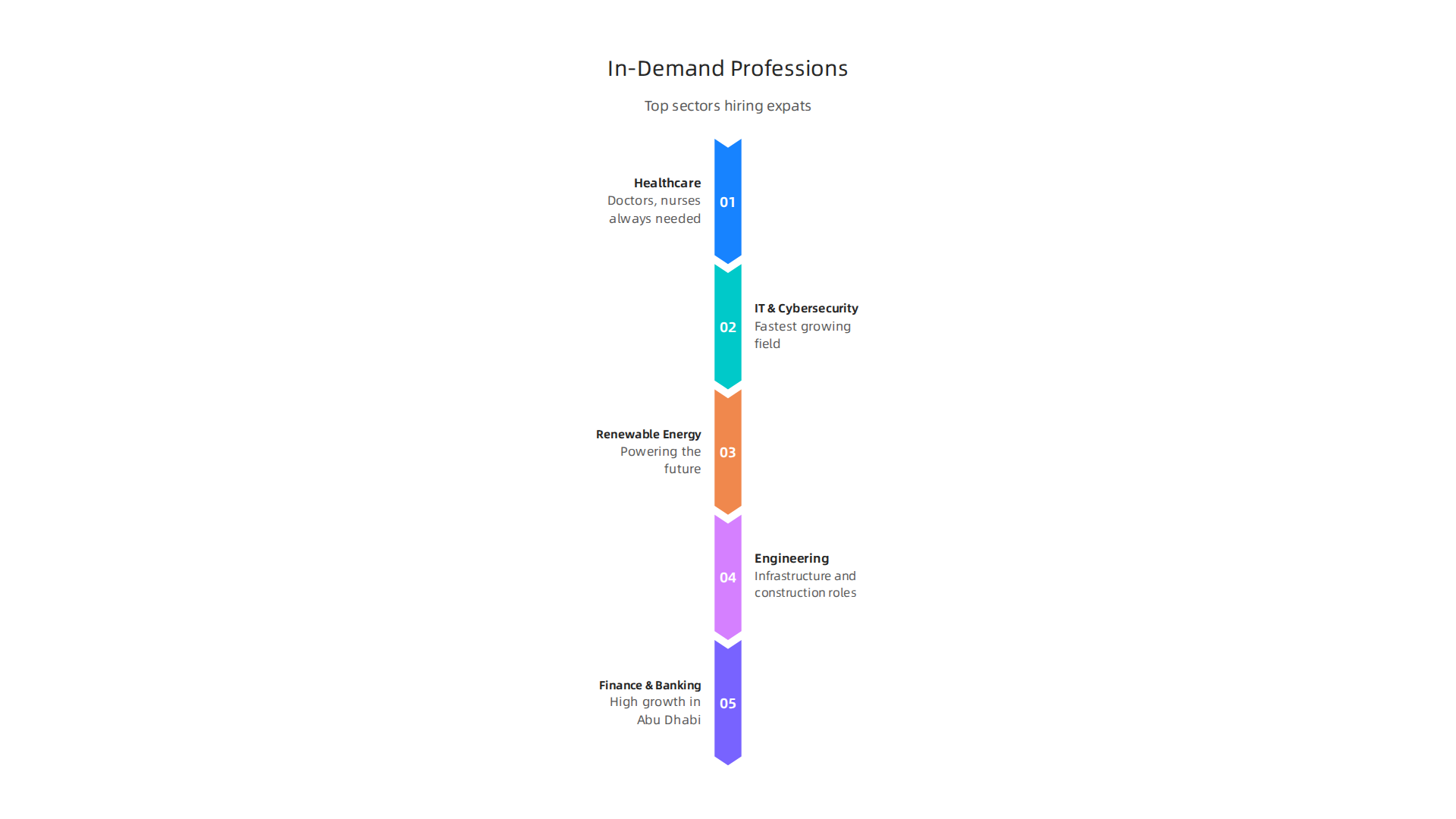
Let’s break down what each field offers, what you need to qualify, and what you can expect to earn.
Healthcare: Doctors and Nurses Always Needed
The UAE needs more medical professionals every year. Physicians and medical specialists are among the highest paid expats globally. According to the best paid jobs worldwide for expats in 2026, a doctor in the UAE can earn $150,000 to $350,000+ per year, tax free. Registered nurses are also in high demand, with salaries ranging from AED 4,000 to AED 27,000 per month depending on experience and hospital. If you have a nursing degree and a few years of experience, you can find work quickly.
IT and Cybersecurity: The Fastest Growing Field
Technology roles are exploding. Software engineers, AI and machine learning specialists, and cybersecurity analysts top the list. The same expat salary guide shows software engineers earning $110,000 to $250,000+ per year including equity. Cybersecurity is especially hot because every company needs to protect its data. The top skills most in demand in the UAE for 2026 include AI, data analysis, cloud computing, and cybersecurity. If you have certifications in these areas, your chances of landing a job go way up.
Renewable Energy and Engineering: Powering the Future
Oil and gas still pay extremely well. Petroleum engineers and petrochemical specialists pull in $120,000 to $200,000+ per year, especially in Abu Dhabi. But renewable energy is also growing fast. ESG (environmental, social, and governance) analysts and sustainability coordinators are in demand as companies meet new reporting rules. Engineering roles in project management for infrastructure and construction also pay well, with typical expat salaries between $100,000 and $160,000 per year.
Finance and Banking: High Growth in Abu Dhabi
Banking and financial services are optimistic in 2026. Abu Dhabi Global Market (ADGM) and Dubai International Financial Centre (DIFC) are attracting many new firms. Roles in fintech, corporate banking, and investment analysis are common. Business development specialists earn AED 9,500 to AED 16,000+ per month, and senior roles pay much more. If you have a CFA or an MBA, you stand out.
Salary Differences Between Abu Dhabi and Dubai
One big thing to know: salary packages vary by emirate. Abu Dhabi tends to offer higher base pay in oil and gas and government sectors. Dubai often adds bigger bonuses, housing allowances, and perks like school fees and health insurance. So think about what matters more to you: a steady high base salary or a package with extras.
How Certifications Boost Your Chances
Employers in the UAE love certifications. They show you are serious and have up-to-date skills. In tech, getting AWS, CISSP, or PMP certifications can raise your salary by 20% or more. In healthcare, having a specialty board certification makes you much more attractive. The job market rewards people who keep learning.
If you are targeting a role in academia or research, check out this guide on how to land NYU Abu Dhabi jobs in 2026. It covers qualifications and tips for getting hired at one of the region’s top universities.
Bottom Line
The 2026 job market in the UAE is wide open for expats with the right skills. Healthcare, tech, energy, and finance lead the way. Focus on getting certified, learn the salary differences by emirate, and apply early. Your next career move could be here.
Navigating the Job Search: Visas, Licensing, and Top Recruitment Agencies
Finding a great job is the first step. Actually getting to work in the UAE is the next. Let’s talk about the practical side of your move.

Understanding Your Visa Options
The UAE has several visa pathways for skilled workers in 2026. The most common is the standard work visa, which an employer sponsors.
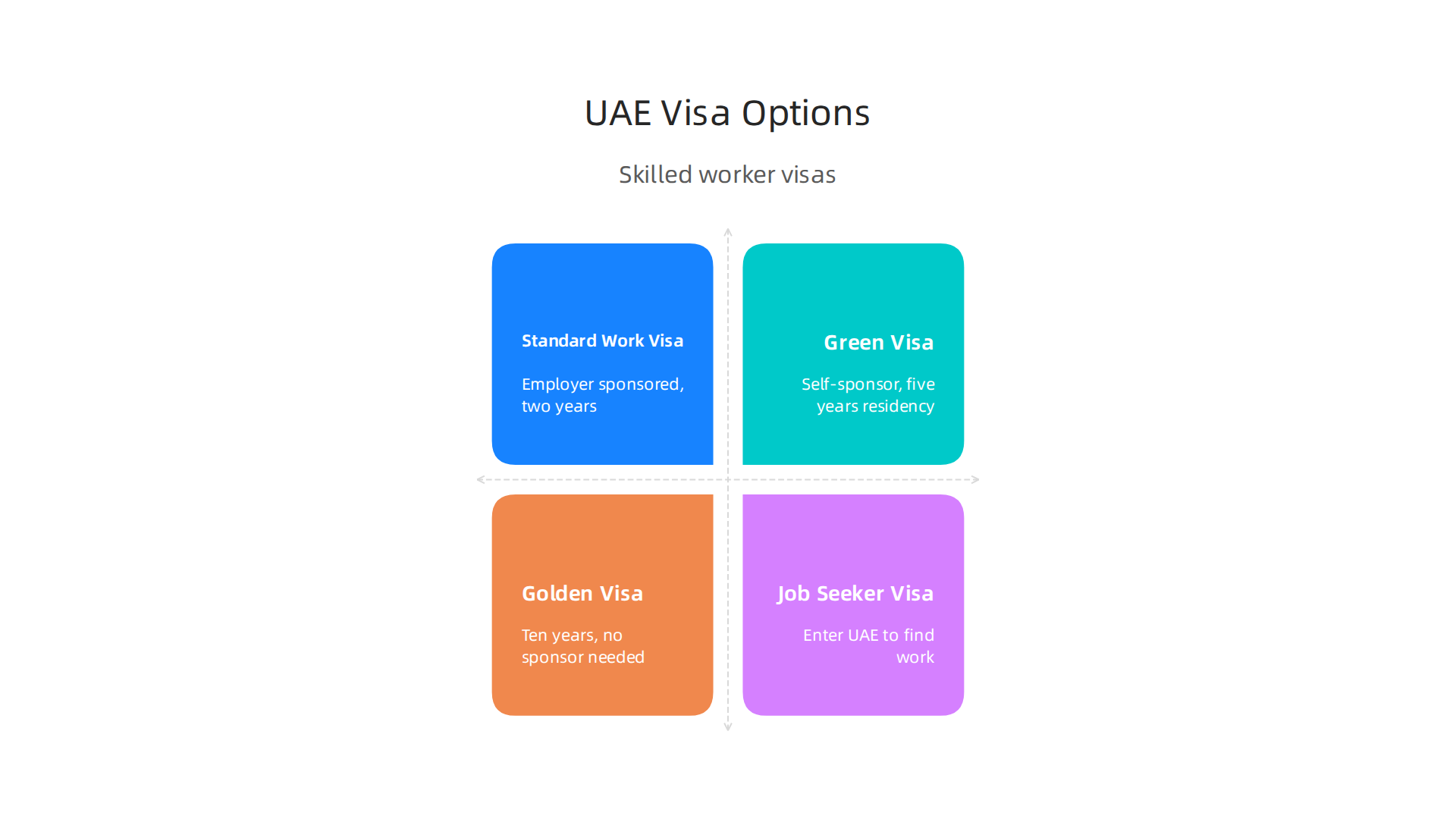
It usually lasts two years. But you have other options too.
The Green Visa lets you sponsor yourself for five years. To qualify, you need a bachelor’s degree and a monthly income of at least AED 15,000. Freelancers and self-employed professionals can also apply if they show an annual income of AED 360,000 or more. The Golden Visa gives ten years of residency without needing a sponsor. It is for investors, entrepreneurs, and highly skilled talent like doctors and scientists.
There is also a job seeker visa. This allows you to enter the UAE and look for work for 60, 90, or even 120 days. It costs roughly between AED 1,495 and AED 1,815. This is a good option if you want to show up, network in person, and attend interviews.
The UAE just expanded its work permit system to 13 categories. This covers everything from standard recruitment and student training to freelance and part-time work. According to the UAE work permit system expansion to 13 categories, the government also cut required paperwork by up to 97% for some permits. This makes the whole process faster.
Professional Licensing
For some professions, a visa alone is not enough. Doctors, nurses, engineers, lawyers, and teachers need a professional license to practice in the UAE. This usually involves verifying your credentials, passing an exam, and registering with the right authority. For example, healthcare workers need approval from the Department of Health in Abu Dhabi or the Dubai Health Authority. It takes some time, so start the process early.
Top Recruitment Platforms
Most expats find their jobs through a few key channels. LinkedIn is huge here, especially for professional and corporate roles. Bayt is another popular platform across the Middle East. Robert Half and other global recruitment agencies also have strong UAE offices.
If you are looking for specific roles, specialized sites can help. For example, if you have experience in retail or logistics, you might check platforms listing merchandiser job vacancies in Dubai. Remote workers can explore virtual assistant jobs that are growing fast. And if you have a heavy vehicle license, ADNOC driver job vacancies often appear on oil and gas job boards. There are also opportunities for driving and family relocation jobs in Dubai if you want to combine driving work with helping families settle in.
When you do land a job, you will likely need housing too. For personalized help finding a home, consider a FREE Dubai Real Estate Consultation. It connects you with an expert who knows the market and can answer your questions.
Cost of Living and Salary Expectations: Abu Dhabi vs. Dubai
Once you have a job offer in hand, the next big question is: how far will your salary actually go? An abu dhabi job market overview for various professions shows that salary expectations vary widely by industry. But the biggest factor in your budget will always be where you live and what you spend.
Here is a simple comparison of the two biggest cities.
Rent: Your Biggest Expense
Rent eats up the largest chunk of most expat paychecks. The good news is that Abu Dhabi is noticeably cheaper than Dubai for housing.
In early 2026, average residential rent runs about AED 80 per square foot in Abu Dhabi compared to AED 121 per square foot in Dubai, according to the Dubai vs Abu Dhabi cost of living and investment comparison for 2026. That difference of over 30% makes a big impact on your monthly budget.
Looking at actual apartments, a one-bedroom in the city center of Abu Dhabi rents for roughly AED 4,500 per month. The same apartment in Dubai would cost around AED 6,500. If you need a three-bedroom, the gap gets even wider, with Abu Dhabi averaging AED 8,266 versus Dubai at AED 9,120, as shown in the comprehensive comparison of Dubai and Abu Dhabi cost of living.
Overall Monthly Costs
Overall, the total cost of living in Dubai is about 15% higher than in Abu Dhabi. Data from June 2026 shows you would need roughly AED 25,361 in Dubai to match the same lifestyle you could have with AED 22,000 in Abu Dhabi. This is based on the cost of living comparison between Abu Dhabi and Dubai.
For a single person living modestly, a monthly budget of AED 9,000 to AED 12,000 works for Dubai. In Abu Dhabi, you can get by on AED 8,000 to AED 10,000. Families of four should budget around AED 20,000 to AED 25,000 in Dubai, and slightly less in the capital.
Salary Differences
Salaries in Abu Dhabi tend to be higher in the energy sector, government roles, and oil and gas companies. Dubai offers competitive pay too, but with more variable bonuses and lifestyle perks. Whether you are looking for merchandiser job vacancies in dubai or virtual assistant jobs, salaries in both cities should cover your basic needs if you plan carefully.
Just keep in mind that jobs like ADNOC driver job vacancies or driving and family relocation jobs in dubai may pay differently depending on the employer. But overall, both cities offer strong earning potential when matched with a realistic budget.
For a deeper look at housing costs, check out this 2026 Dubai real estate market guide on prices and buying tips. It helps you understand what you can expect to pay in different neighborhoods.
Housing and Communities: Matching Your Career to the Right Neighborhood
Beyond just the numbers on rent, your daily commute makes a huge difference in your quality of life. Where you choose to live should match where you work.

The abu dhabi job market overview for various professions shows that the capital has one main business hub, while Dubai has several. So your workplace location matters a lot when picking a neighborhood.
Abu Dhabi Communities: Closer to the Office
In Abu Dhabi, most jobs sit in the central business district on the main island or near government offices. If you work in finance, government, or energy, living close to the city center saves you long drives.
Popular communities for expats include:
- Al Reem Island – a modern island community with apartments and great views. It is close to the city center and popular with professionals.
- Khalifa City – more family-friendly with villas, good schools, and lower rents. It is a bit further out, but still a short drive to many workplaces.
- Saadiyat Island – a luxury area with cultural spots and nice beaches. Perfect if you work in tourism or education at the new universities there.
- Yas Island – known for entertainment and the Formula 1 track. Good for people working in hospitality or retail.
For jobs like ADNOC driver job vacancies, you might prefer Khalifa City or areas near the industrial zones. It keeps the commute reasonable.
Dubai Communities: Pick Your Hub
Dubai is spread out with multiple job hubs. If you work in virtual assistant jobs that are often remote, you have more freedom. But if you are commuting daily to a specific office, choose accordingly.
Here are some popular areas:
- Dubai Marina – lively, with many apartments and a beach vibe. Close to the Dubai Media City and Internet City job hub.
- Downtown Dubai – near the Burj Khalifa. Ideal if you work in business or luxury retail.
- Jumeirah Village Circle (JVC) – family-friendly, with lower rents and good schools. A bit further from central areas.
- Arabian Ranches – quiet villa community, great for families. You will need a car.
- Dubai South – near the new airport and Expo site. This area is growing fast, so if you are looking at merchandiser job vacancies in dubai in logistics, it is a smart choice.
According to data from the cost of living breakdown for Dubai in 2026, rents in areas like JVC and Al Nahda are more affordable than in Marina or Downtown. That leaves more room in your budget for other things.
Think Long-Term
Where you live today might not be where you work in five years. Future job growth areas like Masdar City in Abu Dhabi and Dubai South in Dubai are drawing new industries. Renting or buying in those zones now could pay off later.
If you are looking at driving and family relocation jobs in dubai, it makes sense to choose a community near schools and parks. That way your family settles in quickly.
When you are ready to find your perfect home, connecting with a local expert can save time. Get a FREE Dubai Real Estate Consultation to talk about your needs and budget. They can show you the best neighborhoods for your career and lifestyle.
For families moving, check out this guide to relocating to Dubai with families. It covers schools, neighborhoods, and how to settle in smoothly.
Long‑Term Career Growth: Education, Training, and Expat Integration
Once you have settled into a neighborhood, the next step is building a career that keeps growing. The UAE invests heavily in lifelong learning. Free‑zone universities and professional institutes offer upskilling in exactly the skills employers want most right now.
According to the latest data on the top in‑demand skills in the UAE for 2026, companies are hungry for people who combine technical know‑how with real‑world delivery. The hottest skills include artificial intelligence, data analysis, cloud computing, cybersecurity, and digital marketing. If you work in a field like merchandising or logistics, adding even one of these skills can open doors to better roles. Even for jobs like ADNOC driver or a virtual assistant, learning data basics or digital tools can lead to team leads or operations roles.
How do you get these skills? The UAE has dozens of options. Universities in Abu Dhabi’s free zones and Dubai’s Knowledge Park offer short courses and certificates. Online platforms are also widely used. Many employers pay for your training as part of your contract.
Networking is just as important. Professional groups like BNI and industry chambers help you meet people in your field. They give you insider knowledge about openings and career steps. For expats, these groups are gold. They help you integrate faster and find mentors who have already walked the path.
Career progression often means moving to a growth hub. In Abu Dhabi, the Abu Dhabi Global Market (ADGM) is a magnet for finance and tech jobs. In Dubai, the Dubai International Financial Centre (DIFC) pulls in top talent. If you work in banking, fintech, or professional services, being based near one of these hubs is smart.
If you are aiming for a role at a major institution, start early. For example, if you are interested in teaching or administration at a world‑class university, check out this guide on how to land NYU Abu Dhabi jobs in 2026. It gives you a clear path for the application process.
The key takeaway? Your first job in the UAE does not have to be your last. Keep learning, keep connecting, and stay open to moving where the growth is. That is how you turn a short‑term move into a long‑term career.
Future Outlook: Trends Shaping the UAE Job Market Beyond 2026
Looking ahead, the UAE job market shows no signs of slowing down. Several big trends will shape your opportunities over the next three to five years.

Understanding them now gives you a head start.
First, digital transformation, artificial intelligence, and green energy will keep driving demand for skilled professionals. Sectors like fintech, healthcare, logistics, and sustainable construction are expanding fast. The UAE economy is on track for around 5 percent growth in 2026, supported by strong non-oil sectors according to the UAE Economy Set for 5% Growth in 2026 report. Companies are hiring for roles that blend technical skills with real-world delivery. If you have experience in AI project management, renewable energy installation, or health technology, your value will keep rising.
Second, Emiratisation policies will affect the availability of certain roles for expats, especially in government-related jobs. This does not mean expat opportunities are shrinking. It means the private sector will become an even bigger source of jobs. Multinational corporations, startups, and free zone companies remain open to international talent. The key is to target sectors with high expat demand like technology, finance, construction, and hospitality.
Third, remote work and the growth of co-working spaces are changing where expats choose to live. You no longer have to live near your office. Many professionals now base themselves in more affordable communities or quieter neighborhoods while still working for Dubai or Abu Dhabi employers. This flexibility is making places like Al Nahda, International City, and Arjan popular. If you are considering relocating with your family, a family relocation guide for Dubai can help you find the right community that balances commute, cost, and lifestyle.
These trends mean the Abu Dhabi job market overview for various professions will keep evolving. Whether you are looking for merchandiser job vacancies in Dubai, virtual assistant jobs, ADNOC driver job vacancies, or driving and family relocation jobs in Dubai, staying aware of these shifts helps you plan ahead.
If you are planning a move to the UAE, it helps to have the right housing sorted early. Get a FREE Dubai Real Estate Consultation to discuss your options.
Summary
This guide offers a practical abu dhabi job market overview for various professions in 2026 and compares opportunities across Abu Dhabi and Dubai, explaining why each emirate suits different careers. It covers the UAE’s simplified work permit system, visa options like the Green and Golden Visas, and the types of roles most in demand—healthcare, IT/cybersecurity, renewable energy, finance and construction—plus typical salary ranges. The article explains how certifications and professional licensing affect hiring, shows real cost‑of‑living and rent differences between the two cities, and links job location to neighborhood choice and family needs. You will learn how to plan a job search, which platforms and agencies to use, what to budget for housing, and steps to upskill and integrate for long‑term growth. Practical details such as job seeker visa lengths and costs, salary comparisons, and relocation tips make it actionable for expats considering a move. After reading, you should be able to target the right emirate, pick suitable neighborhoods, and prepare visas, licensing, and finances for a successful move.