
Find the Best Property in Dubai in 2026 with This Strategic Buying Guide
Introduction: Why Dubai’s Luxury Property Market Demands a Strategic Eye
Dubai’s luxury property market is not what it was a year ago. The frantic pace is cooling, and buyers are becoming much more careful. If you are searching for the best property in Dubai in 2026, you already know that opportunity exists. But so does risk. Information overload, confusing legal steps, and a flood of new developments can make the hunt for a luxury house for sale Dubai feel overwhelming.
Successful investing in this environment requires a clear head and a solid strategy.
According to a recent analysis of what 2026 looks like for Dubai homes, the market is shifting from fast-paced decisions to a phase where long-term thinking drives value. This means that whether you are looking for a dubai luxury home for sale or growing your real estate business, you cannot rely on gut feelings alone. You need a plan.
This guide is designed to be that plan. It is a practical, step-by-step framework to cut through the noise and find the perfect property for your goals. I will cover everything from choosing the right neighborhood to understanding the numbers behind a smart investment. To get a head start, check out some top curated options for luxury homes for sale in Dubai. And if you want personal guidance right away, book a FREE Dubai Real Estate Consultation today.
1. The Dubai Luxury Property Market in 2026: Key Trends and Forecasts
Let’s look closer at what that shift means for you. The market for the best property in Dubai in 2026 is a story of two speeds. Luxury villas and prime residences in established areas are holding strong, while new supply in less central zones may face some price adjustments. Understanding this split is critical if you are looking at dubai luxury homes for sale right now.
Supply and Demand Dynamics
Villas remain the star performer. According to the latest property price forecasts for Dubai 2026, villas are appreciating at around 13% to 15% per year, almost double the pace of apartments. Why? Because supply of true villas in master-planned communities is constrained. Many new developments are high-rise apartments, so the number of new luxury villas hitting the market stays low. This keeps prices firm for any luxury house for sale Dubai listings in areas like Palm Jumeirah, Emirates Hills, and Dubai Hills Estate.
At the same time, over 76,000 new units are expected to deliver across Dubai in 2026. That is a huge number. Some analysts warn this could cause a price dip. A Reuters report from Fitch Ratings predicts a double-digit fall in Dubai real estate prices as supply surges. But the luxury segment is different. Prime areas have such strong demand from high-net-worth buyers that prices there are much more resilient.
What Drives Value in 2026?
Connectivity is becoming a bigger factor. Communities linked to the upcoming Dubai Metro Blue Line are expected to outperform. Areas like Dubai Creek Harbour, Dubai Silicon Oasis, and Festival City are seeing renewed interest because buyers now factor commute times and walkability into their decisions.
UAE policy changes also play a role. Long-term residency options and a stable political environment continue to attract global investors. This keeps the luxury market healthy even when the broader economy slows down.
Hotspots to Watch
Which neighborhoods are forecast to lead in 2026? Data points to Dubai Hills Estate, DIFC, Palm Jumeirah, and Mohammed Bin Rashid City. These areas combine limited supply with strong lifestyle appeal. For buyers seeking a dubai luxury home for sale, these locations should be at the top of your list.
To make sense of all these numbers and find the right opportunity, you need a partner who knows the market inside out. Whether you are building a real estate business or buying your dream home, expert guidance helps you avoid overpaying. For a broader overview of what is driving growth, check this 2026 forecast on Dubai property market trends. And if you want to understand how to pick the right developer for your investment, reading about how to choose a real estate developer in UAE can save you from costly mistakes.
2. What Defines the ‘Best’ Luxury Property in Dubai?
So what really makes a property the "best" in Dubai’s crowded luxury market? It is not just about a high price tag. True luxury combines location, architecture, quality, and an exclusive lifestyle that standard homes simply cannot match.

The Six Pillars of a Luxury Home
According to a helpful guide on what defines luxury in real estate, there are six main factors that separate a truly premium home from an average one.
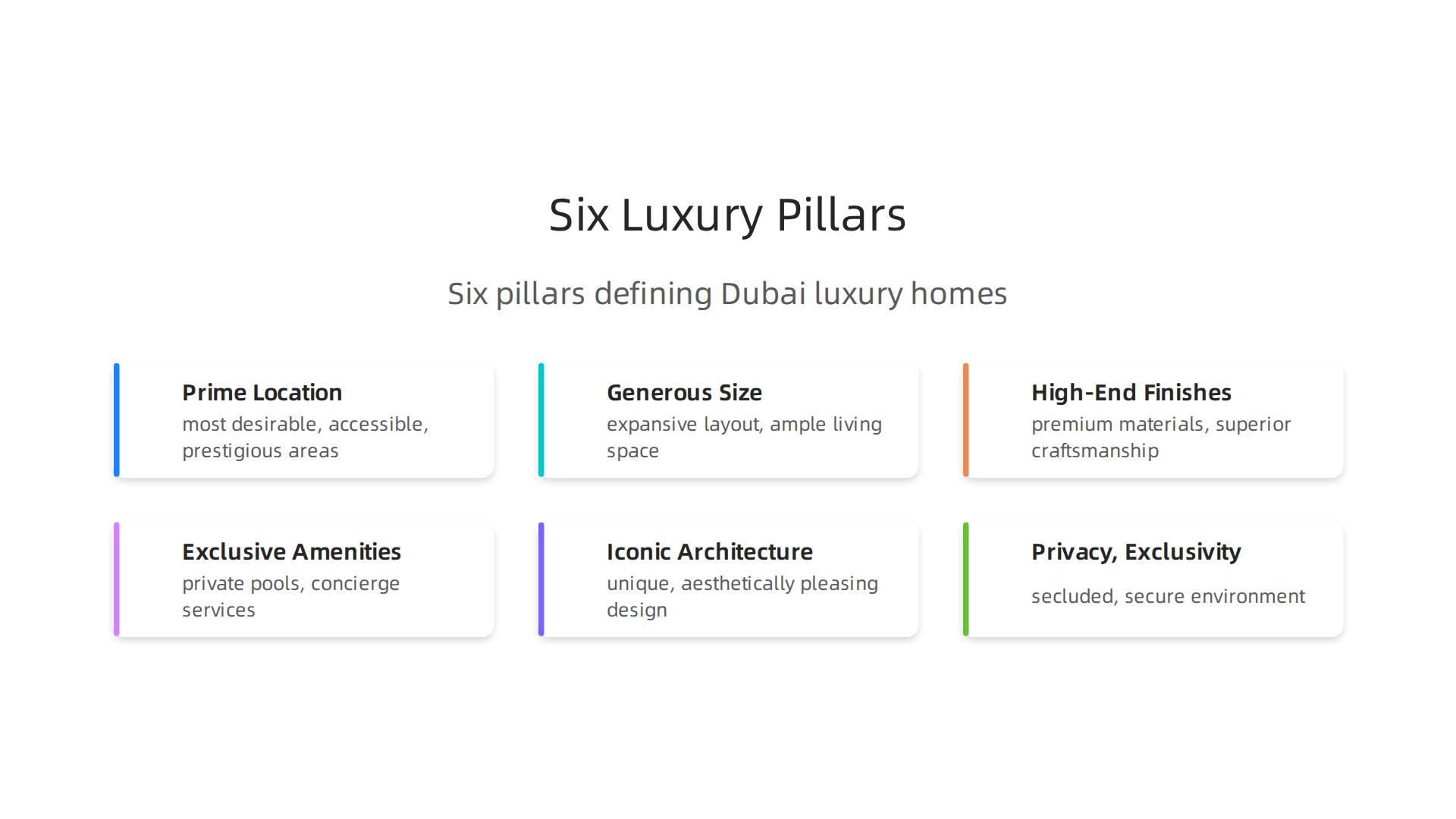
These include a prime location, generous size and layout, high-end construction and finishes, exclusive amenities like private pools and concierge services, iconic architectural design, and a strong sense of privacy and exclusivity. Developer reputation also matters enormously. Properties built by trusted names like Emaar or Damac often hold their value better because buyers know the craftsmanship will be top-tier.
Branded Residences vs Standalone Villas
A big trend in 2026 is the rise of branded residences. These are luxury apartments or villas developed in partnership with famous brands like Bulgari, Armani, or Versace. They come with hotel-level service, design curated by the brand, and a certain prestige. Some buyers prefer these because the reputation of the brand guarantees a certain standard. Standalone villas, on the other hand, offer more privacy and the chance to customize everything from the floor plan to the garden. Which is better depends on your goal. If you are buying for status and convenience, a branded residence in a high-rise with full service might be ideal. If you want space and a family compound, a private villa in Emirates Hills or Palm Jumeirah is hard to beat.
Matching Property Type to Your Lifestyle
Your choice should also match how you plan to use the home. Are you looking for a primary residence, a holiday home, or a pure investment? For investors, luxury properties in communities with limited supply and strong rental demand offer the best returns. For families, a spacious villa in a master-planned community with schools and parks is often the winner. Aligning your lifestyle needs with the property type is the key to long-term satisfaction.
To see how these factors play out in the current market, explore this expert guide to prime luxury communities in Dubai 2026. It breaks down the best areas for different types of buyers.
If you are ready to narrow down your search and find a home that truly fits your vision, connect with us for a FREE Dubai Real Estate Consultation. Our team can help you match your lifestyle and investment goals to the right property.
3. Top Luxury Communities in Dubai: Where to Invest
Now that you know what makes a luxury home special, it is time to pick the right neighborhood. The best property in Dubai sits in communities that combine prime location, lifestyle, and long-term value. Some areas are already famous. Others are rising fast in 2026.
Established Luxury Communities
These neighborhoods are the gold standard of Dubai luxury living.
Palm Jumeirah is the most iconic address in the city. Its fronds hold some of the most expensive villas in the world. Private beaches, infinity pools, and direct sea views are standard here. The frond villas and the new Billionaire’s Row mansions set the bar for exclusivity.
Emirates Hills is often called the Beverly Hills of Dubai. This gated community has over 500 custom-built estates on large plots. It is close to Downtown and Dubai Marina, making it ideal for families who want space and privacy near the city.
Dubai Marina offers luxury high-rise living with stunning water views. Penthouses here feature floor-to-ceiling windows, private pools, and rooftop terraces. It is perfect for professionals who want a vibrant, walkable lifestyle.
Downtown Dubai is home to the Burj Khalifa and Dubai Mall. Luxury apartments in towers like The Address and Vida Residences give you unmatched city views and five-star concierge service.
Emerging Luxury Areas
Newer communities offer great potential for buyers looking for a fresh start.
Dubai Hills Estate is a Beverly Hills style community with a central golf course, parks, and top schools. Developers like Emaar have built high-end villas and mansions here. It appeals to families who want green space and modern design.
Tilal Al Ghaf is a waterfront community with lagoons, sandy beaches, and a resort feel. It is less crowded than Palm Jumeirah but offers similar luxury at a lower entry price.
Jumeirah Bay Island is a new island development with ultra-luxury villas and mansions. It is becoming a hotspot for high-net-worth buyers who want total privacy and direct beach access.
Comparing Price Points and Yields
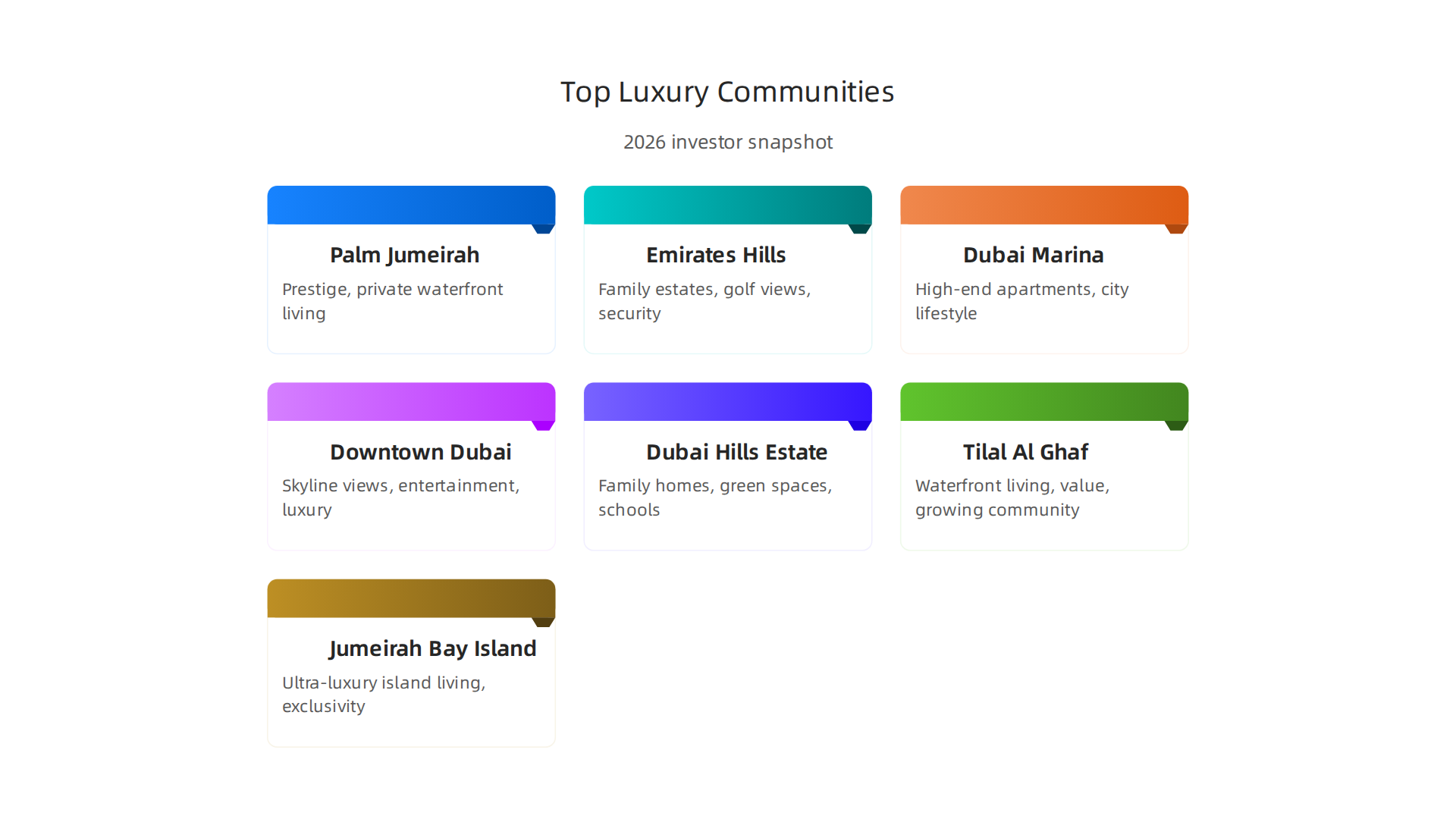
Different communities serve different goals. The table below gives a quick snapshot of what you can expect in 2026.
| Community | Approximate Villa Price Range | Typical Rental Yield | Best For |
|---|---|---|---|
| Palm Jumeirah | $5M to $80M+ | 3% 4% | Prestige, privacy, waterfront living |
| Emirates Hills | $4M to $30M+ | 3% 4% | Family estates, golf views, security |
| Dubai Marina | $1M to $10M (apartments) | 5% 7% | High-end apartments, city lifestyle |
| Downtown Dubai | $1M to $15M (apartments) | 5% 6% | Skyline views, entertainment, luxury towers |
| Dubai Hills Estate | $2M to $15M | 4% 5% | Family homes, green spaces, schools |
| Tilal Al Ghaf | $1.5M to $8M | 5% 6% | Waterfront living, value, growing community |
| Jumeirah Bay Island | $3M to $20M+ | 3% 4% | Ultra-luxury island living, exclusivity |
Luxury properties in established areas offer stable capital appreciation. Emerging areas often give higher rental yields because entry prices are lower and demand is rising. According to a breakdown of Dubai’s luxury market, areas like Palm Jumeirah and Emirates Hills remain the top choice for millionaires and billionaires.
If you want to see detailed listings in these communities, check out this curated selection of luxury homes for sale in Dubai. It lists some of the finest properties available right now.
For families moving to Dubai, understanding the school catchment areas and community vibe is just as important. This guide for families relocating to Dubai covers everything you need to settle in smoothly.
4. Financial Analysis: ROI, Yields, and Capital Appreciation
Numbers matter when you are looking for the best property in Dubai.
You want to know how much money your investment can make and what costs come with it. Let us break down the real numbers for 2026.
Average Rental Yields
Dubai continues to offer strong rental returns compared to other global cities. As of April 2026, the overall average rental yield in Dubai is 6.68%. Apartments perform better than villas, with average yields of 7.15% for apartments and 4.98% for villas and townhouses. This data comes from a detailed 2026 market insights report on rental yields in Dubai.
Luxury communities like Palm Jumeirah and Emirates Hills typically fall in the 3-4% yield range. That is lower than the city average. But you are paying for prestige, privacy, and long-term value. Investors who focus on yield alone often look at areas like Jumeirah Village Circle or International City, where yields can reach 8-9%.
Capital Appreciation Trends
Capital appreciation is the other half of your return. In recent years, Dubai property values have risen quickly. In 2026, projections show capital appreciation rates around 14% for many areas. Luxury homes in prime locations especially benefit from limited supply and strong demand from high-net-worth buyers.
The best property in Dubai for you depends on your goal. If you want cash flow, look for higher yield areas. If you want long-term price growth, buy in an established luxury community.
Total Cost of Ownership
Owning a luxury home in Dubai comes with costs beyond the purchase price. Here is what you need to budget for:
- Dubai Land Department fee: 4% of the purchase price
- Agency fee: about 2%
- Registration and admin fees: around 1% of overheads
- Service charges: These vary by community. For luxury apartments in Dubai Marina, expect 10-20 AED per square foot per year. For villas on Palm Jumeirah, charges can be 20-30 AED per square foot.
So when you buy a property, add about 7% on top of the sticker price. That is money you need to have ready.
Annual service charges and maintenance also cut into your net rental yield. Use the net yield formula: (Annual Rent minus Annual Expenses) divided by Purchase Price times 100. This gives you a true picture of your return.
If you want personalized advice on finding the best property in Dubai for your budget, connect with a local expert. You can book a FREE Dubai Real Estate Consultation to discuss your options.
5. Navigating Dubai’s Property Laws for Foreign Buyers
You have found the numbers that work for you. Now comes the legal side. Do not worry. Dubai makes it possible for foreigners to own property. But you need to know the rules.
Freehold vs Leasehold: Where You Can Buy
Dubai allows foreign buyers to own property in specific areas called freehold zones. These are neighborhoods where you get full ownership of the land and the building. Think of it like owning a house back home. Popular freehold areas include Dubai Marina, Palm Jumeirah, Downtown Dubai, and Emirates Hills.
In leasehold areas, you own the building but not the land. You get a long-term lease, often 99 years. Most foreign buyers stick to freehold areas because full ownership is simpler.
A helpful legal breakdown of the entire buying process is available in this comprehensive guide for A Guide for the Legal Procedures to Buy Property in Dubai. It explains Law No. 7 of 2006, which gives foreigners the right to own property in freehold zones.
Step-by-Step Buying Process
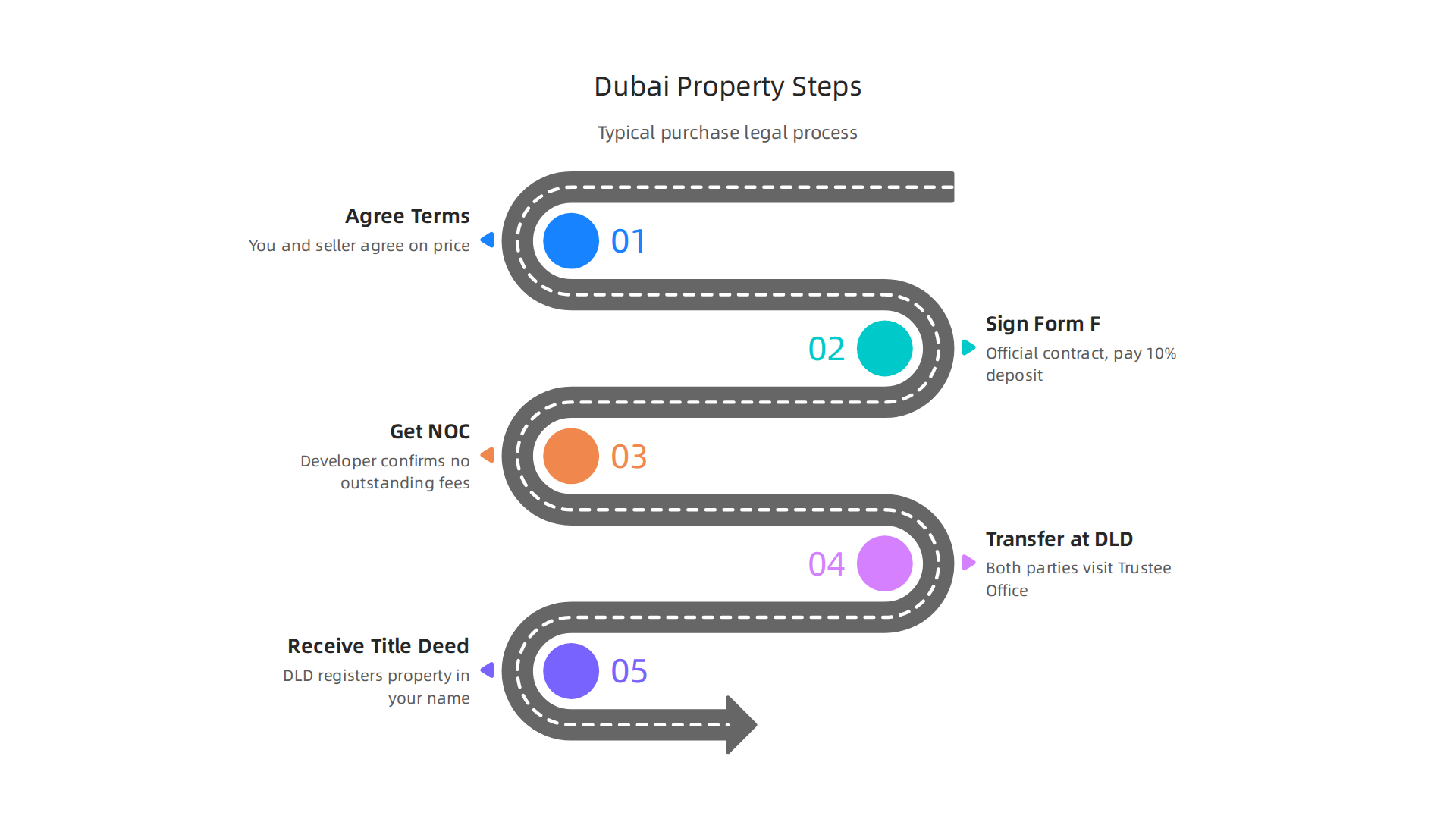
Here is how a typical property purchase works in Dubai:
-
Agree on terms: You and the seller agree on the price and conditions.
-
Sign Form F (Memorandum of Understanding): This is the official contract. You pay a 10 percent deposit, which goes into an escrow account.
-
Get a No Objection Certificate (NOC): The developer must confirm there are no outstanding fees on the property.
-
Transfer at the Dubai Land Department (DLD): Both parties visit a DLD Trustee Office. You submit your passport, Emirates ID, the signed Form F, the NOC, and your payment cheque.
-
Receive your title deed: The DLD registers the property in your name. You get a confirmation email and a new title deed.
The whole transfer can happen in a single day. That is fast by global standards. If you want a more detailed walkthrough of each step, check out this legal guide on how to buy an apartment in Dubai in 2026.
Due Diligence: Protect Yourself
Before you sign anything, do your homework. Here is what matters most:
-
Clear title: Use the DLD website to check that the seller actually owns the property and there are no liens or disputes.
-
Developer approval: Make sure the developer has issued the NOC. Without it, the transfer cannot happen.
-
Escrow accounts: Your deposit and payments should go into a registered escrow account, not directly to the seller or agent. This protects your money.
-
RERA registration: Always work with a real estate agent who is registered with the Real Estate Regulatory Agency (RERA). You can verify their license on the DLD website.
These steps sound like extra work, but they save you from serious headaches later. Dubai’s legal system is investor friendly, but you need to follow the process correctly.
If you want personalized guidance through every step of the legal process, connect with a local expert. Get a FREE Dubai Real Estate Consultation to discuss your options and make sure everything is in order before you buy.
6. Financing Your Luxury Property Purchase
You have picked the neighborhood and checked the legal rules. Now the big question: how do you pay for it? The good news is Dubai offers several ways to finance your buy. Your choice depends on where your money comes from and how fast you want to close.
Mortgage Options for Residents and Nonresidents
Banks in Dubai give mortgages to both residents and nonresidents. Residents can often borrow up to 80 percent of the property value. Nonresidents typically need a bigger down payment, around 30 to 40 percent. Interest rates are competitive and usually linked to the Emirates Interbank Offered Rate (EIBOR) plus a small margin.
Keep in mind the extra costs. You will pay about 4 percent of the purchase price to the Dubai Land Department and another 2 percent in agency fees. So plan to have at least 25 to 30 percent of the property price in cash before you apply. One video on mortgage considerations in Dubai breaks down these costs in detail.
Cash Purchases
If you have the full amount available, cash gives you real power. Sellers love cash buyers because the deal closes fast with no bank delays. You can often negotiate a lower price too. This is a common way to buy luxury house for sale Dubai listings, especially in premium areas like Palm Jumeirah.
Developer Payment Plans and Joint Ventures
Many developers offer payment plans for off plan properties. You might pay 10 percent at signing and the rest in installments over three to five years. This option works well if you want to spread out your cash flow.
For very high value deals, some investors form joint ventures with partners. You pool money, share the risk, and split the returns. It is a smart move for anyone serious about real estate business in Dubai.
If you are looking for the best property in Dubai, explore our list of luxury homes for sale in Dubai for current 2026 investment opportunities. Knowing your financing options puts you ahead in the market.
7. Selecting the Right Real Estate Advisor
You know your budget and your preferred neighborhood. Now you need someone who knows the market inside out. A good real estate advisor can save you time, money, and headaches.

A bad one can cost you all three.
Why a Local Expert Matters
Dubai’s property market moves fast. Rules change. Prices shift. The right advisor keeps you on track. They know which areas are rising and which are not. They also understand the legal steps to buy property in Dubai, from the Form F agreement to the Dubai Land Department transfer. You do not need to learn all of this alone.
A local expert also helps you find the best property in Dubai that fits your real goals. Whether you want a family villa in Arabian Ranches or a high end apartment on Palm Jumeirah, they know where to look and who to call.
What to Look For
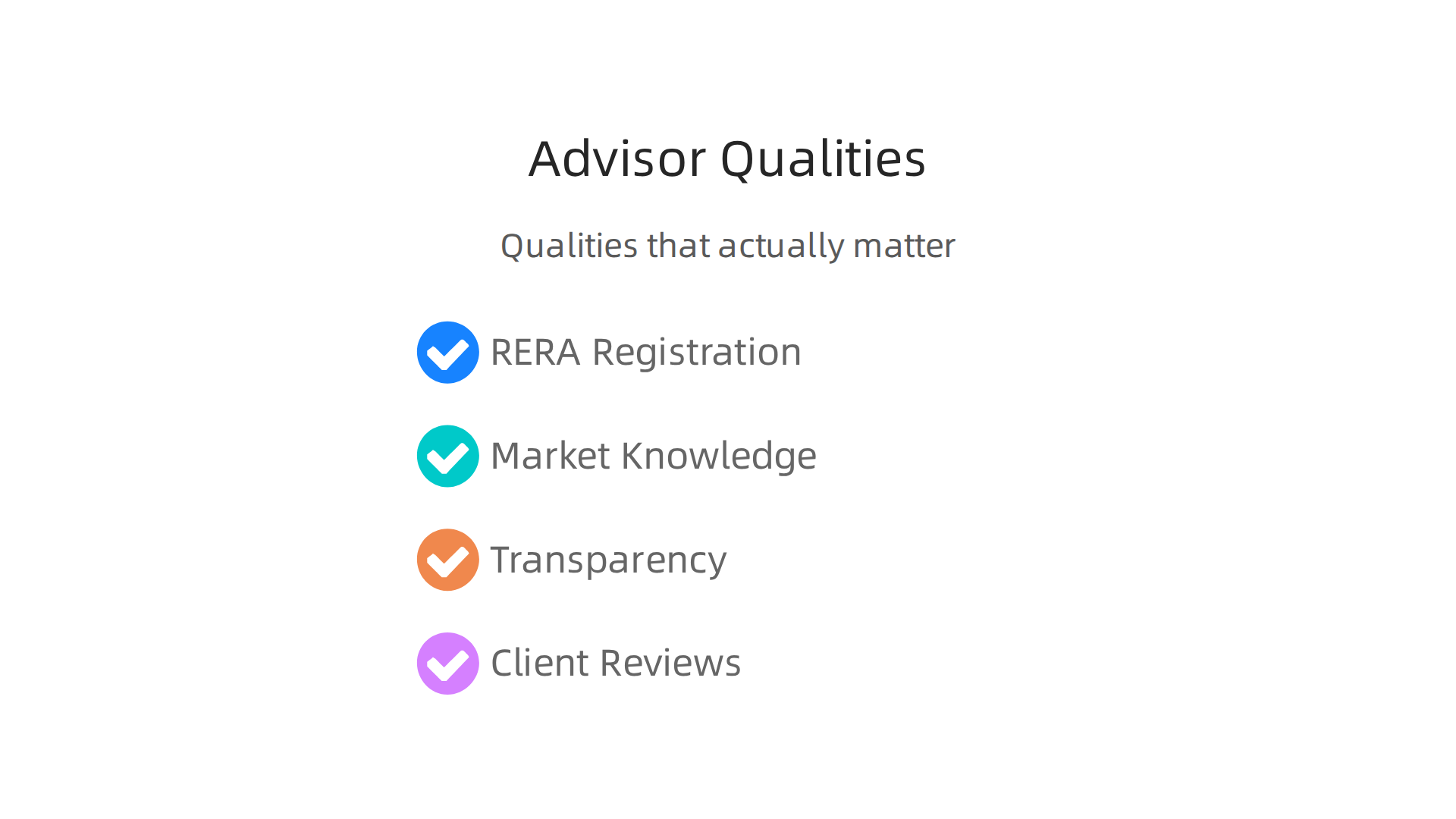
Not every agent is the same. Here are the qualities that actually matter:
| Quality | Why It Matters |
|---|---|
| RERA registration | It is the law. Only deal with agents registered with the Real Estate Regulatory Agency. |
| Market knowledge | They should know current prices, upcoming projects, and community trends. |
| Transparency | No hidden fees. No vague answers. They explain everything clearly. |
| Client reviews | Check what past buyers say. Look for someone with a proven track record. |
The guide to the legal procedures to buy property in Dubai on Property Finder recommends dealing only with RERA registered agents.
This is not just good advice. It protects your money.
How to Evaluate an Advisor
Before you commit, ask a few direct questions:
- How many years have you worked in Dubai real estate?
- Can you show me recent sales in the area I am interested in?
- Which developers do you work with most?
- What fees will I pay beyond the purchase price?
A confident advisor answers these right away. A nervous one probably does not know the answers.
After you pick the right person, you need to build a smart team around them. Learn how to choose a Dubai property agency in 2026 to make sure you start with a strong partner.
Ready to Talk to a Trusted Expert?
You have the knowledge. Now get the guidance. If you are ready to move forward with buying, selling, or investing in Dubai real estate, connect with Ayaz Salman for a free consultation. He can walk you through your options, answer your questions, and help you find the right property for your needs.
8. Long-Term Ownership and Exit Strategies
Buying a property is just the beginning. Smart investors also plan for what comes next. How will you manage the property day to day? And when the time comes, how will you sell or move on?
Property Management: Do It Yourself or Hire Help
You have two main options. You can manage the property yourself. That means finding tenants, handling repairs, and dealing with paperwork. It saves money but takes time.
Or you can hire a professional property management firm. They handle everything for a fee. That usually runs around 5 to 10 percent of the rent. This is a popular choice for overseas investors who want a hands off approach.
Your Exit Routes
Every investor needs a clear exit plan. The best property in Dubai today might not fit your needs in ten years. Here are the most common exit routes:
- Resale to end users. Sell your property to someone who wants to live in it. This works best for family friendly communities with strong demand.
- Selling to investors. Some buyers look for rental income, not a home. If your property offers good yields, this can be a quick sale.
- Vacation rental conversion. Short term rentals on platforms like Airbnb can earn more than long term leases. But they also require more work and come with rules.
Timing matters a lot. As the guide to When to Exit Dubai’s Luxury Property Market explains, selling before a wave of new supply hits can help you lock in better prices.
Tax and Wealth Transfer
Dubai has no property tax or capital gains tax. That is a big win for sellers. You keep most of your profit. But you should still think about how the property fits into your bigger financial picture. Will it pass to your family smoothly? Do you need a will?
Talk to a legal advisor about succession planning. This protects your investment for the long haul.
If you are exploring options that work for both living and future resale, take a look at these luxury homes for sale in Dubai. They are designed to hold value and attract serious buyers.
Summary
This guide walks buyers and investors through Dubai’s changed luxury property market in 2026, explaining which neighbourhoods hold value, what makes a home truly ‘luxury’, and how to analyse returns. It covers supply and demand dynamics, hotspots like Palm Jumeirah and Dubai Hills Estate, and the growing importance of connectivity and branded residences. You’ll get clear numbers on rental yields, capital appreciation, and full ownership costs so you can calculate net returns. The article also explains freehold vs leasehold rules, the step‑by‑step legal transfer process, and practical due diligence to protect your purchase. It outlines mortgage rules for residents and non‑residents, developer payment plans, and when cash pays off. Finally, it shows how to pick a local advisor, manage the property, and plan exit strategies so you can buy smarter and protect your wealth.